


Why Do I Sweat So Much in the Heat?
Sweating in the heat is normal.
But that does not mean it always feels comfortable.
When the weather is hot, sweat can build quickly. Add humidity, direct sun, walking, errands, outdoor work, travel, golf, yard projects, or a shirt that holds moisture, and sweat can start to feel sticky, heavy, damp, or distracting.
If you have ever wondered, “Why do I sweat so much in the heat?” the answer is usually not just one thing. Heat, humidity, activity level, airflow, sun exposure, clothing fabric, and how long you are outside can all affect how much you sweat and how uncomfortable that sweat feels.
This guide is not medical advice or a diagnosis. It is a practical, clothing-focused guide to understanding sweat discomfort in hot weather and choosing shirts, towels, and fabrics that help support everyday comfort.
Why Sweating Happens in Hot Weather
Sweating is one way the body responds to heat.
When your body temperature rises, sweat helps create moisture on the skin. As that moisture evaporates, it can help release heat. That process works better when there is airflow and when clothing does not trap moisture heavily against the body.
That is why sweating can feel different depending on the day.
On a dry day with airflow, sweat may feel less noticeable. On a humid day, sweat may linger longer. In a heavy cotton shirt, sweat may feel damp and clingy. In breathable, moisture-wicking, quick-dry fabric, sweat can feel less heavy and distracting.
For more general heat comfort guidance, start with the Staying Cool Hub.
Why You May Sweat More in the Heat
There are several everyday reasons sweat can feel more noticeable in hot weather.
Hot air raises the demand on your body
When the temperature rises, your body has to work harder to stay comfortable. Sweat may become more noticeable during errands, walks, outdoor tasks, travel, or long afternoons outside.
Humidity makes sweat feel like it stays longer
Humidity can make sweat feel worse because moisture may not dry as quickly. Even if you are not doing anything intense, humid air can make a shirt feel damp or sticky faster.
Direct sun adds more heat
Sun exposure can make the same temperature feel hotter. Parking lots, sidewalks, patios, golf courses, outdoor markets, and backyards can all feel warmer when the sun is strong.
Movement builds heat
Walking, carrying bags, working outside, gardening, golfing, cleaning, grilling, or moving through a travel day can all increase sweat. Even normal daily movement can feel harder in summer heat.
Clothing can trap heat and moisture
The wrong shirt can make sweat feel worse. Heavy cotton, thick fabric, tight fits, and slow-drying materials can hold moisture and make the day feel hotter than it needs to.
When Sweat Feels Worse, Fabric Is Often Part of the Problem
Sweating itself is not always the main issue.
The real discomfort often comes from how clothing reacts to sweat.
A regular shirt may absorb moisture and hold onto it. Once that happens, the fabric can feel heavy, damp, sticky, or clingy. The shirt may also take longer to dry, especially in humidity or when there is little airflow.
That is why clothing choice matters for people who sweat a lot in the heat.
Look for shirts with:
- Breathable fabric so heat does not feel trapped
- Moisture-wicking comfort to help move sweat away from the skin
- Quick-dry performance so fabric does not stay damp for hours
- Lightweight stretch for walking, errands, work, travel, and movement
- A comfortable fit that does not cling too tightly
- Temperature-regulating technology to help support comfort in real-life heat
For a deeper explanation of fabric features, read Cooling vs. Moisture-Wicking.
Sweating vs. Overheating: What Is the Difference?
Sweating and feeling overheated are connected, but they are not exactly the same.
Sweating is a normal body response to heat. Feeling overheated is the uncomfortable sensation that can happen when heat, humidity, activity, sun, poor airflow, or heavy clothing make it harder to feel comfortable.
For everyday situations, better clothing can help sweat feel less uncomfortable. Breathable, quick-dry, moisture-wicking fabrics can reduce the heavy, clingy feeling that comes from sweat-soaked clothing.
For more on feeling too warm in general, read Why Do I Overheat So Easily?.
Why Cotton Can Feel Worse When You Sweat
Cotton can feel soft and familiar at first, but it is not always the best choice for hot, sweaty days.
When cotton absorbs sweat, it can hold moisture longer. That may make the shirt feel damp, heavy, and sticky. If the day includes humidity, walking, errands, outdoor work, or long hours outside, that damp feeling can last longer than you want.
This is one reason people often search for better shirts for sweat.
The goal is not to stop sweat. The goal is to choose clothing that helps sweat feel less uncomfortable while you move through the day.
For product-specific guidance, read Best Shirts for People Who Sweat a Lot.
What to Wear If You Sweat a Lot in the Heat
If you sweat easily in hot weather, start with the shirt closest to your skin.
That base layer matters because it is the fabric that will interact most with heat, sweat, and movement.
Choose breathable shirts
Breathable shirts help reduce the trapped, heavy feeling that can happen when air cannot move through the fabric.
Choose moisture-wicking fabric
Moisture-wicking fabric helps move sweat away from the skin so the shirt feels less damp and clingy.
Choose quick-dry fabric
Quick-dry performance matters because a shirt that dries faster usually feels more wearable after sweat builds.
Choose comfortable fits
Overly tight shirts can cling quickly once sweat builds. A comfortable fit gives the fabric room to move and breathe.
Choose lightweight stretch
Lightweight stretch helps when the day includes walking, reaching, driving, carrying bags, bending, working outside, or traveling.
Best Men’s Shirt for Sweat and Heat
The Men’s Cooling Crew Neck is a strong everyday option for men who sweat in hot weather.
It has the easy feel of a go-to tee, but it is built with breathable comfort, moisture-wicking performance, quick-dry fabric, lightweight stretch, and sweat-activated temperature regulation.
That makes it useful for errands, walking, travel, yard work, garage projects, golf, grilling, outdoor events, and hot-weather weekends.
Best for:
- Men who sweat easily in heat
- Everyday summer wear
- Walking and errands
- Travel days
- Yard work and outdoor tasks
- Casual weekends
Best Women’s Shirt for Sweat and Heat
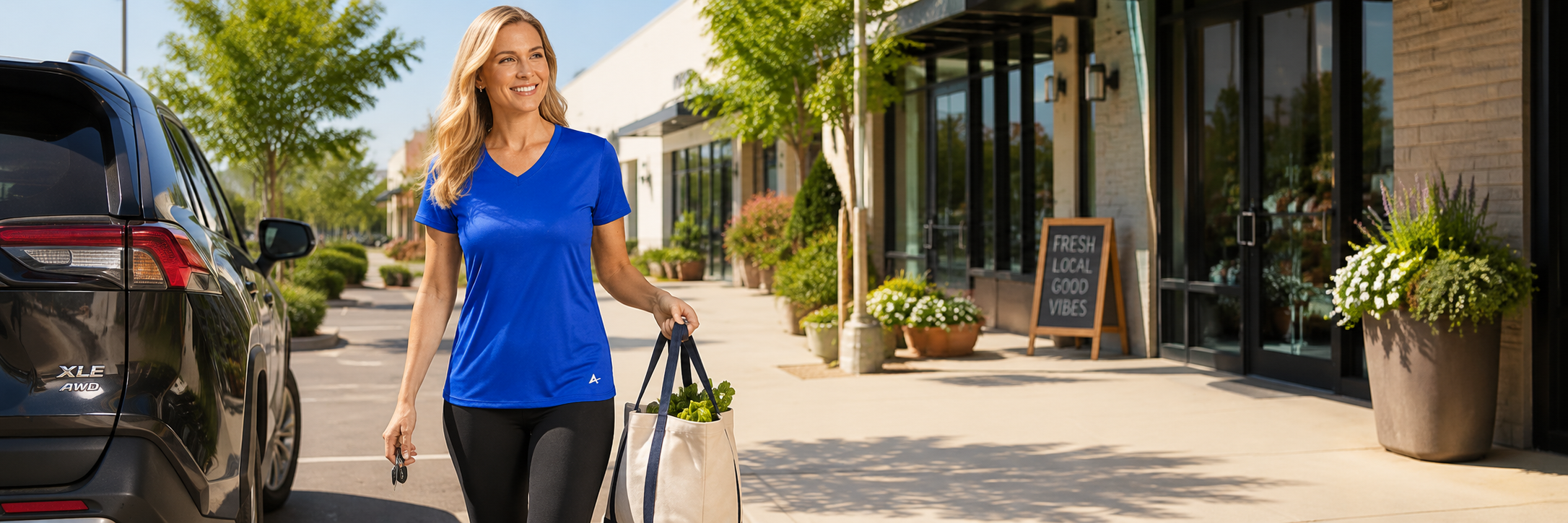
The Women’s Cooling V-Neck is a practical everyday option for women who sweat or run hot in summer.
It is easy to wear for errands, walking, travel, outdoor markets, school pickup, warm daily routines, and casual plans. The V-neck shape feels simple and wearable, while the fabric supports breathable, moisture-wicking, quick-dry comfort.
This is a good choice when you want a shirt that feels built for heat without looking like gym-only apparel.
Best for:
- Women who sweat easily in heat
- Daily errands
- Walking and travel
- Warm outdoor plans
- Casual summer outfits
- Everyday comfort
When to Add a Cooling Towel
Sometimes a shirt is the foundation, but you still want an extra heat-ready accessory.
The Cooling Towel is useful when sweat and heat build during specific moments. It can be kept nearby and used during breaks, outdoor work, golf, travel stops, errands, heat waves, walking, or long afternoons outside.
Keep one:
- In the car
- In a tote or backpack
- In a golf bag
- Near the patio or grill
- In the garage or shed
- In a cooler or travel bag
- By the door for walks or errands
A Cooling Towel does not replace a good shirt. It works as an add-on for peak heat, breaks, and moments when the day feels hotter than expected.
How HydroFreeze X™ Helps With Sweat Comfort
Arctic Cool apparel is built around HydroFreeze X™ sweat-activated temperature-regulating technology.
That matters for sweat because the technology is designed to work with moisture, airflow, and evaporation to help support comfort in real-life heat.
When sweat builds, breathable and moisture-wicking fabric can help move moisture and reduce the heavy, sticky feeling that happens when a regular shirt stays damp. Quick-dry performance helps the shirt feel wearable longer. Lightweight stretch helps the shirt move with you instead of clinging or pulling during everyday activity.
The goal is practical comfort, not a medical promise. The right shirt can help sweat feel less distracting while you move through heat, humidity, sun, and everyday summer plans.
Everyday Situations Where Sweat Feels Worse
Sweat can feel more uncomfortable in some situations because heat, movement, and clothing all stack together.
Errands and parking lots
Car heat, pavement, grocery bags, and store stops can make sweat build faster than expected.
Travel days
Airports, road trips, rest stops, luggage, and long hours in the same outfit can make damp clothing feel uncomfortable.
Outdoor work and yard projects
Gardening, mowing, garage projects, patio cleanup, and grilling can all create repeated sweat moments throughout the day.
Golf and outdoor sports
Walking, sun, humidity, and long hours outside can make fabric choice matter more.
Heat waves
When temperatures stay high for several days, even simple tasks can feel warmer and sweatier than usual.
What Not to Wear If Sweat Bothers You
If sweat makes you uncomfortable in hot weather, avoid clothing that makes moisture feel worse.
Try to avoid:
- Heavy cotton shirts that stay damp
- Thick fabrics that trap heat
- Overly tight tops that cling quickly
- Slow-drying materials
- Stiff shirts that do not move well
- Layers that only feel comfortable indoors
- Clothing that feels heavy once sweat builds
A better hot-weather outfit should feel breathable before you sweat and more comfortable after sweat starts to build.
How to Make Sweat Feel Less Uncomfortable
You cannot always control the heat, but you can make practical choices that help the day feel better.
- Wear breathable, moisture-wicking, quick-dry shirts
- Choose comfortable fits that do not cling too tightly
- Use lightweight stretch for movement
- Keep a Cooling Towel nearby for peak heat
- Take shade breaks when possible
- Keep water nearby during outdoor tasks
- Plan heavy outdoor work for cooler parts of the day when you can
- Pack a backup shirt for travel or long days outside
These steps are simple, but they can make sweat feel less distracting during normal hot-weather routines.
When to Pay Closer Attention
This article focuses on everyday sweat discomfort in the heat.
If sweating feels sudden, unusual, severe, or comes with symptoms like feeling faint, confused, dizzy, weak, sick, or seriously overheated, get out of the heat and seek appropriate medical guidance.
For regular summer sweat discomfort, clothing can be part of the comfort plan. For health concerns, it is best to check with a qualified professional.
Recommended Arctic Cool Picks for Sweat and Heat
- Men’s Cooling Crew Neck for men’s everyday sweat comfort, errands, walking, yard work, travel, and hot-weather weekends
- Women’s Cooling V-Neck for women’s everyday heat comfort, errands, walking, travel, and warm summer routines
- Cooling Towel for peak heat, breaks, errands, outdoor work, travel, golf, and long summer days
The Bottom Line
Sweating in the heat is normal, but your clothing can make a big difference in how sweat feels.
Heavy, slow-drying, clingy fabrics can make sweat feel worse. Breathable, moisture-wicking, quick-dry clothing can help sweat feel less heavy and distracting.
For men, start with the Men’s Cooling Crew Neck. For women, start with the Women’s Cooling V-Neck. For peak heat moments, keep a Cooling Towel nearby.
The goal is not to stop sweating. The goal is to make hot-weather sweat feel more manageable with clothing and accessories built for real summer comfort.
For more heat and sweat guidance, visit the Staying Cool Hub.
FAQs
Why do I sweat so much in the heat?
You may sweat more in the heat because hot air, humidity, sun exposure, movement, poor airflow, and clothing can all make your body work harder to stay comfortable. This guide focuses on everyday sweat discomfort, not medical causes.
What should I wear if I sweat a lot in hot weather?
Wear breathable, moisture-wicking, quick-dry clothing with a comfortable fit. A cooling shirt can help sweat feel less heavy or clingy, and a Cooling Towel can be useful during peak heat or breaks.
Does moisture-wicking fabric stop sweating?
No. Moisture-wicking fabric does not stop sweating. It helps move sweat away from the skin so the shirt can feel less damp, sticky, or heavy during hot-weather activity.
Are cooling shirts good for people who sweat a lot?
Cooling shirts can be helpful for people who sweat a lot because they are designed to support breathability, moisture movement, quick drying, and temperature regulation in real-life heat.
When should I be concerned about sweating in the heat?
If sweating feels sudden, unusual, severe, or comes with symptoms like dizziness, faintness, confusion, weakness, nausea, or serious overheating, get out of the heat and seek appropriate medical guidance.

Leave a comment
This site is protected by hCaptcha and the hCaptcha Privacy Policy and Terms of Service apply.