

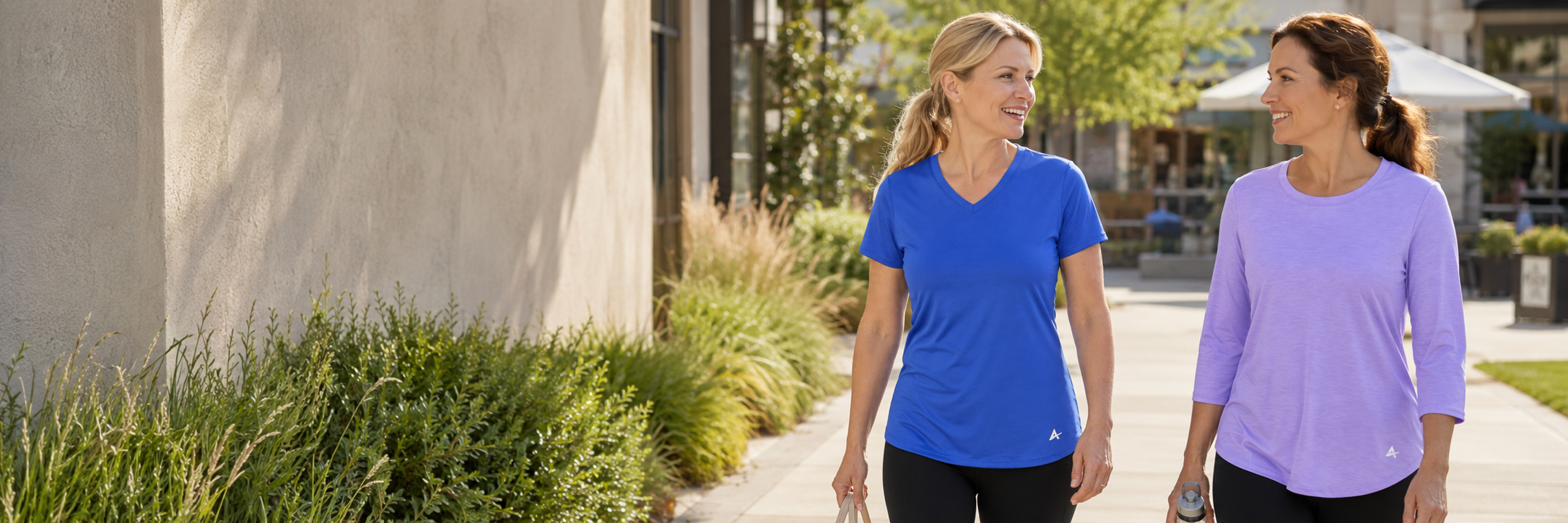
Best Shirts for Hot Flash Comfort and Everyday Overheating
Feeling suddenly warm can make an ordinary shirt feel uncomfortable very quickly. Fabric may begin clinging, the neckline may feel restrictive, and a layer that felt fine a few minutes earlier may suddenly feel heavier than expected.
Everyday overheating can create similar clothing challenges during errands, workdays, travel, walking, outdoor plans, warm indoor spaces, or frequent transitions between air conditioning and heat.
The right shirt cannot prevent or treat hot flashes, and clothing should never be presented as medical care. It can, however, make the experience of warmth and perspiration easier to manage by providing breathable fabric, moisture-wicking performance, quick drying, lightweight stretch, and a fit that feels comfortable as conditions change.
This guide is part of the Arctic Cool Staying Cool Hub, our central resource for understanding heat, sweat, cooling fabrics, and practical hot-weather clothing.
Quick answer: The best shirts for hot flash comfort and everyday overheating are lightweight, breathable, moisture-wicking, quick-drying, and easy to layer. A short sleeve V-neck offers everyday versatility, a 3/4 sleeve provides adaptable coverage, and a sleeveless top reduces arm coverage during warmer conditions.
Hot Flash Comfort and Everyday Overheating Are Not the Same Thing
Hot flashes and general overheating can both involve feeling warm or perspiring, but they should not automatically be treated as the same experience.
This article does not attempt to explain why someone experiences sudden warmth, diagnose symptoms, or recommend medical treatment. It focuses only on clothing decisions that may feel more comfortable when warmth or perspiration changes unexpectedly.
For a broader discussion of environmental heat, fabric, activity, and why someone may feel warm more easily, read Why Do I Overheat So Easily?.
Seek guidance from a qualified healthcare professional when sudden warmth, sweating, or other symptoms are new, severe, concerning, or disruptive to everyday life.
Why Clothing Can Feel More Noticeable During Sudden Warmth
When you begin feeling warm, clothing that was previously comfortable may become distracting.
Common apparel frustrations include:
- Fabric clinging after perspiration begins
- A neckline feeling too close or restrictive
- Sleeves feeling heavier than expected
- Layers becoming difficult to remove
- Shirts remaining damp after the warm feeling passes
- Dense fabric holding moisture
- An outfit feeling too athletic for work or everyday plans
- Needing different coverage indoors and outside
A better clothing strategy focuses on adaptability. The shirt should manage moisture when warmth builds, dry efficiently afterward, and remain appropriate for the rest of the day.
What to Look for in a Shirt for Hot Flash Comfort
Lightweight Fabric
A lightweight shirt can feel less burdensome when warmth arrives unexpectedly. Look for fabric that provides useful coverage without feeling thick, stiff, or unnecessarily dense.
Lightweight construction is especially helpful when you need to wear the same shirt through work, errands, travel, indoor air conditioning, and outdoor heat.
Breathability
Breathable fabric allows air to move through and around the garment. This can help the shirt feel less enclosed when your body begins feeling warmer.
Fit matters as well. A shirt does not need to be oversized, but it should offer enough room for comfortable airflow and movement.
Moisture-Wicking Performance
Moisture-wicking fabric helps move perspiration away from the skin and distribute it through the material.
It does not stop perspiration. Its role is to make moisture easier for the fabric to manage so the shirt is less likely to feel immediately heavy or saturated.
Quick-Dry Comfort
A sudden period of warmth may pass, but a slow-drying shirt can remain damp afterward.
Quick-dry performance is valuable when you need the garment to recover without changing clothes, especially during meetings, errands, travel, meals, or long days away from home.
Lightweight Stretch
Stretch helps a shirt move comfortably while sitting, walking, driving, reaching, or carrying everyday items.
It also reduces the pulling and bunching that can make a warm moment feel more distracting.
A Comfortable Neckline
Neckline preference is personal, but many women prefer a more open neckline when they feel warm.
A V-neck can provide an everyday silhouette with more openness around the upper chest than a high crew neckline. A scoop neck may provide another comfortable option while maintaining additional sleeve coverage.
Adaptable Sleeve Length
The ideal sleeve depends on your environment and how quickly temperatures change throughout the day.
- Short sleeve: A versatile choice for errands, work, travel, and everyday wear.
- 3/4 sleeve: Useful when you want more coverage or regularly move through cooler indoor spaces.
- Sleeveless: A lighter option for warm environments, casual plans, or days when less arm coverage feels more comfortable.
Compare the options in the Women’s Sleeve Length Guide.
Best Everyday Option: Women’s Short Sleeve Cooling V-Neck
The Women’s Short Sleeve Cooling V-Neck is the most versatile starting point for everyday comfort.
Its familiar silhouette works for:
- Work and casual office settings
- Errands and appointments
- Travel days
- Walking
- Outdoor lunches
- Warm indoor spaces
- Everyday routines that move between different temperatures
The V-neck provides an open neckline while the short sleeves offer more coverage than a tank. It can be worn alone during warmer conditions or paired with an easy-to-remove layer when indoor spaces feel cooler.
The shirt combines HydroFreeze X™ sweat-activated temperature-regulating technology with breathable fabric, moisture-wicking performance, quick-dry comfort, lightweight stretch, and UPF 50+ protection.
Best Adaptable Coverage: Women’s 3/4 Sleeve Cooling Shirt
The Women’s 3/4 Sleeve Cooling Shirt is useful for women who want more coverage without committing to a full-length sleeve.
It can be especially practical when your day includes:
- Strong office air conditioning
- A cool morning followed by a warm afternoon
- Travel between different environments
- Outdoor errands followed by indoor appointments
- Sun exposure where additional arm coverage is preferred
- A polished outfit that still needs to feel lightweight
The scoop neckline keeps the silhouette open, while the 3/4 sleeves provide a middle ground between short and long sleeves.
For days with repeated temperature changes, it may feel easier than carrying a heavy cardigan or wearing a thick long-sleeve shirt.
Best Minimal-Coverage Option: Women’s Cooling Sleeveless Tank
The Women’s Cooling Sleeveless Tank provides less arm coverage for warm environments and casual routines.
It is a practical option for:
- Warm indoor spaces
- Peak summer errands
- Walking and outdoor activity
- Travel to warm destinations
- Casual weekends
- Layering beneath a very lightweight removable piece
A sleeveless top can feel especially adaptable when you prefer to control coverage with a separate layer rather than wearing sleeves all day.
Because the arms and shoulders are more exposed, use sunscreen when spending time outside and consider the amount of sun coverage the activity requires.
When to Use a Cooling Towel
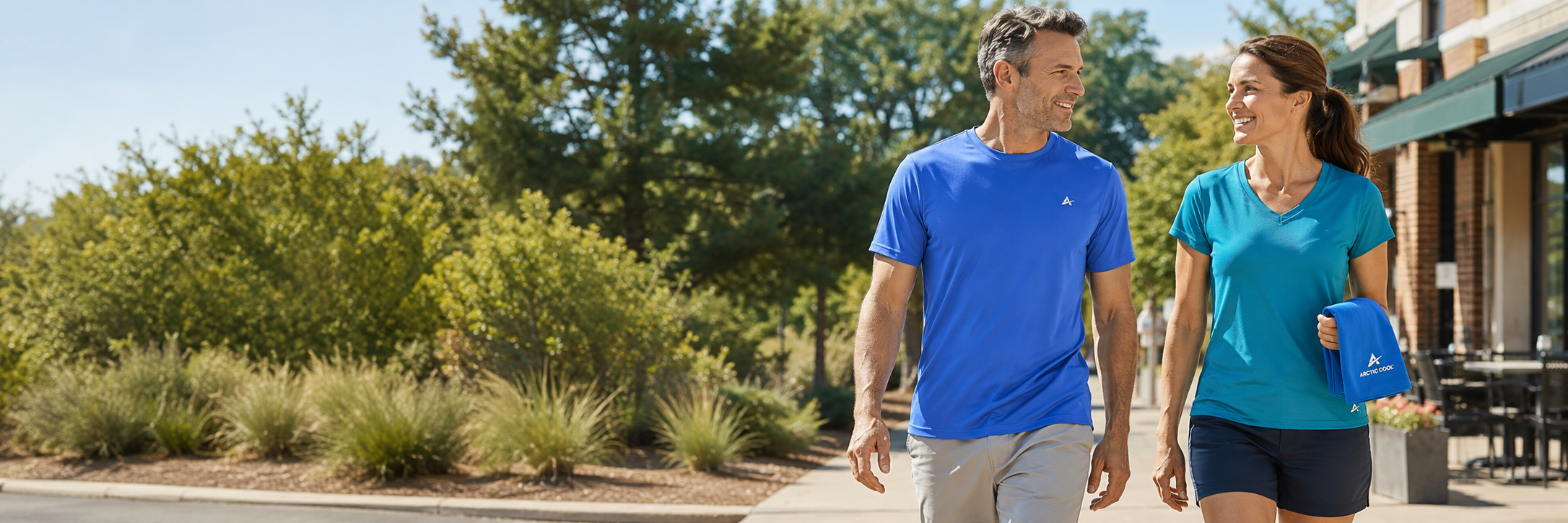
A cooling shirt provides continuous everyday comfort as the base of the outfit. An Arctic Cool Cooling Towel can be kept nearby for moments when additional support feels useful.
It may be convenient:
- Inside a work or travel bag
- In the car during errands
- At an outdoor event
- During a walk
- Near a home workspace
- During yard or garden tasks
- On especially hot or humid days
The towel should be viewed as an optional comfort accessory, not as a treatment for hot flashes or another medical symptom.
How HydroFreeze X™ Supports Clothing Comfort
Arctic Cool apparel uses HydroFreeze X™, a sweat-activated temperature-regulating technology designed to work as moisture and airflow interact with the fabric.
Moisture-wicking performance helps move perspiration through the material. Breathability supports airflow, while quick-dry fabric helps the garment recover after becoming damp.
These apparel features may help a shirt feel more manageable during heat and perspiration, but they do not prevent the body from feeling warm and do not treat the cause of hot flashes.
Learn more through the Arctic Cool Technology page and How Sweat-Activated Cooling Works.
Cooling Fabric vs. Moisture-Wicking Fabric
Moisture management is one of the most important apparel considerations when warmth and perspiration arrive unexpectedly.
Moisture-wicking fabric is designed to move perspiration away from the skin. Cooling fabric may combine moisture movement with airflow, quick drying, and temperature-regulating technology.
The strongest everyday option is not simply the thinnest shirt. Look for a combination of breathability, moisture management, quick drying, stretch, and comfortable fit.
Read Cooling vs. Moisture-Wicking and Cooling Fabrics Explained for more detail.
How to Dress for Indoor and Outdoor Temperature Changes
One of the hardest clothing challenges is moving between a cool indoor environment and warm outdoor conditions.
A practical outfit should make it easy to adjust without completely changing clothes.
Start With the Cooling Shirt
Choose a V-neck or sleeveless top as the breathable base. This gives the outfit a lightweight foundation when you move into a warmer space.
Add Only a Removable Lightweight Layer
When indoor air conditioning feels cold, add a light layer that can be removed quickly. Avoid building the outfit around a thick sweater or jacket that becomes difficult to carry later.
Keep the Bottoms Lightweight
Heavy bottoms can make the complete outfit feel warm even after the top layer has been removed. Choose lightweight shorts, capris, leggings, or pants with comfortable stretch.
Carry a Cooling Towel Separately
Keeping a towel in a tote or work bag provides an optional cooling tool without adding another layer to the outfit.
Hot Flash Comfort Outfit Formulas
Everyday Errands
- Women’s Short Sleeve Cooling V-Neck
- Lightweight shorts or capris
- Comfortable walking shoes
- Cooling Towel kept in the car or tote
This formula works through parking lots, warm cars, stores, appointments, and everyday walking without looking like a workout outfit.
Workday Comfort
- Women’s 3/4 Sleeve Cooling Shirt or Short Sleeve V-Neck
- Lightweight stretch pants, capris, or polished bottoms
- Easy-to-remove light layer only when needed
- Cooling Towel stored discreetly in a work bag
Choose a neckline and sleeve length that feel professional while remaining easy to wear through indoor temperature changes.
Warm Indoor Environment
- Women’s Cooling Sleeveless Tank
- Lightweight bottoms
- Optional open-front layer that can be removed quickly
- Cooling Towel nearby
A sleeveless foundation provides the most flexibility when you control coverage with a separate removable layer.
Travel Day
- Women’s Short Sleeve Cooling V-Neck
- Stretch travel pants or capris
- Very lightweight layer for airplanes or air-conditioned spaces
- Cooling Towel packed where it is easy to reach
Quick-dry clothing is particularly useful during travel because the same outfit may need to remain wearable through transportation, meals, walking, and warm destinations.
Outdoor Walking or Errands
- Women’s Cooling V-Neck or Sleeveless Tank
- Lightweight shorts or movement-friendly bottoms
- Sunscreen on exposed skin
- Cooling Towel
Choose the sleeve length based on sun exposure, expected temperature, and the amount of time outside.
What to Avoid When You Overheat Easily
- Thick shirts that remain damp
- Dense fabric with limited airflow
- High or restrictive necklines when they feel uncomfortable
- Layers that cannot be removed easily
- Overly tight shirts that cling after perspiration begins
- Heavy cardigans carried through warm outdoor conditions
- Slow-drying cotton as the only layer during a long day
- Outfits selected only for indoor air conditioning
The most comfortable choice depends on your preferences. Some women prefer minimal sleeves, while others feel better with more coverage. The important part is choosing lightweight fabric and a silhouette that can adapt as conditions change.
Build a Small Comfort Rotation
You do not need a large wardrobe to create practical options for everyday overheating.
A small rotation might include:
- Two Short Sleeve Cooling V-Necks
- One 3/4 Sleeve Cooling Shirt
- One Cooling Sleeveless Tank
- Two pairs of lightweight bottoms
- One easily removable layer
- One Cooling Towel
Choose colors that coordinate with the same bottoms so the pieces remain easy to mix and repeat.
For additional product comparisons, visit Best Cooling Shirts for Women Who Run Hot, Best Shirts for People Who Overheat Easily, and Best Cooling Outfits for Women in Hot Weather.
Shop Women’s Cooling Options
- Choose the Women’s Short Sleeve Cooling V-Neck for everyday versatility.
- Choose the Women’s 3/4 Sleeve Cooling Shirt for adaptable coverage.
- Choose the Women’s Cooling Sleeveless Tank for minimal arm coverage.
- Add an Arctic Cool Cooling Towel for optional support during warmer moments.
- Browse the Women’s Cooling Collection for additional shirts, polos, tanks, layers, and bottoms.
Comfort That Can Adjust With the Day
Sudden warmth and everyday overheating can make clothing feel more important than it did when the day began.
The goal is not to find a shirt that promises to stop hot flashes. It is to choose apparel that feels light, manages moisture, dries efficiently, and adapts to different environments without drawing more attention to the discomfort.
A short sleeve V-neck provides everyday versatility. A 3/4 sleeve offers adaptable coverage. A sleeveless tank creates a lighter foundation, while a Cooling Towel can remain nearby for moments when additional support feels useful.
The right combination is the one that helps you feel comfortable, confident, and prepared to continue with the day.
Frequently Asked Questions
What type of shirt feels best during a hot flash?
A lightweight, breathable, moisture-wicking, and quick-dry shirt may feel more comfortable during sudden warmth. Look for an adaptable neckline, comfortable fit, and a sleeve length that suits your environment and preferred coverage.
Can a cooling shirt stop or treat hot flashes?
No. Cooling apparel does not stop, prevent, or treat hot flashes. It is designed to support clothing comfort through breathability, moisture management, quick drying, and temperature-regulating fabric.
Is a short sleeve, 3/4 sleeve, or sleeveless shirt best?
A short sleeve offers everyday versatility, a 3/4 sleeve provides additional adaptable coverage, and a sleeveless shirt reduces arm coverage in warmer environments. The best choice depends on your comfort preferences, sun exposure, dress needs, and indoor temperature.
What fabric should I look for if I overheat easily?
Look for lightweight, breathable fabric with moisture-wicking and quick-dry performance. Stretch and a comfortable fit can also make the shirt easier to wear as warmth, perspiration, and movement change throughout the day.
Should I carry a Cooling Towel for sudden warmth?
A Cooling Towel can be a convenient optional accessory to keep in a work bag, car, travel tote, or outdoor kit. It may provide added comfort during warm moments, but it is not a treatment for hot flashes or other symptoms.

Leave a comment
This site is protected by hCaptcha and the hCaptcha Privacy Policy and Terms of Service apply.